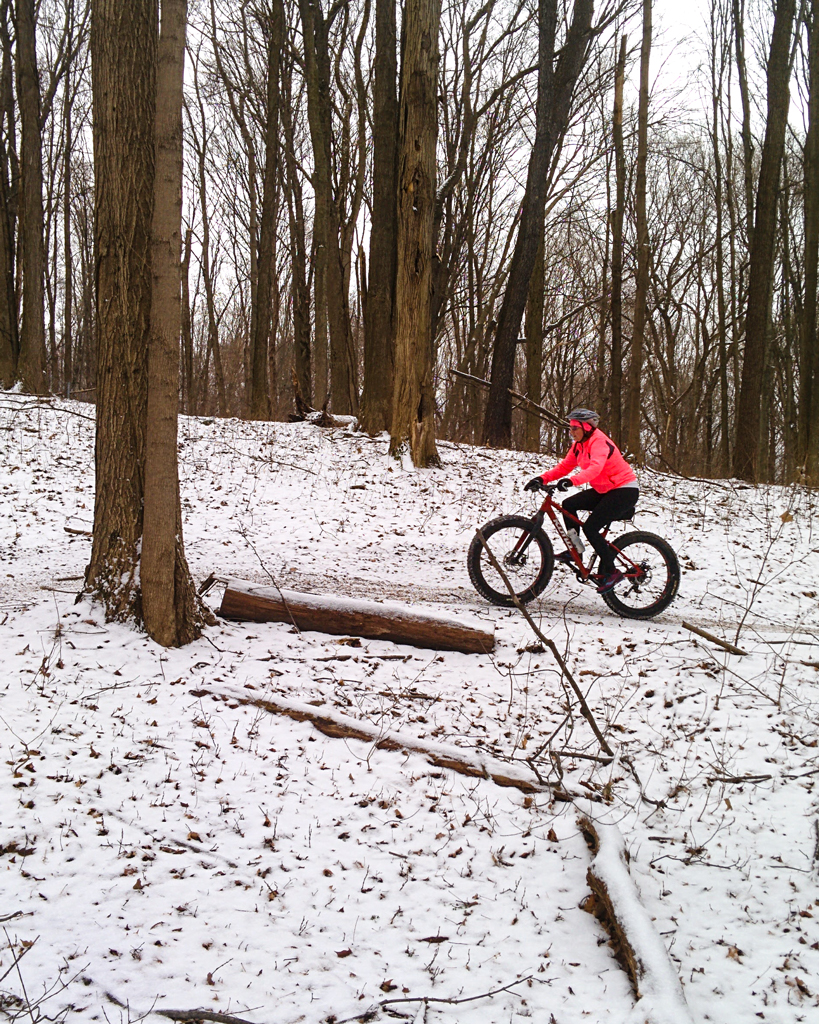
We’ve been getting questions about fat bike grooming, so here’s the full story.
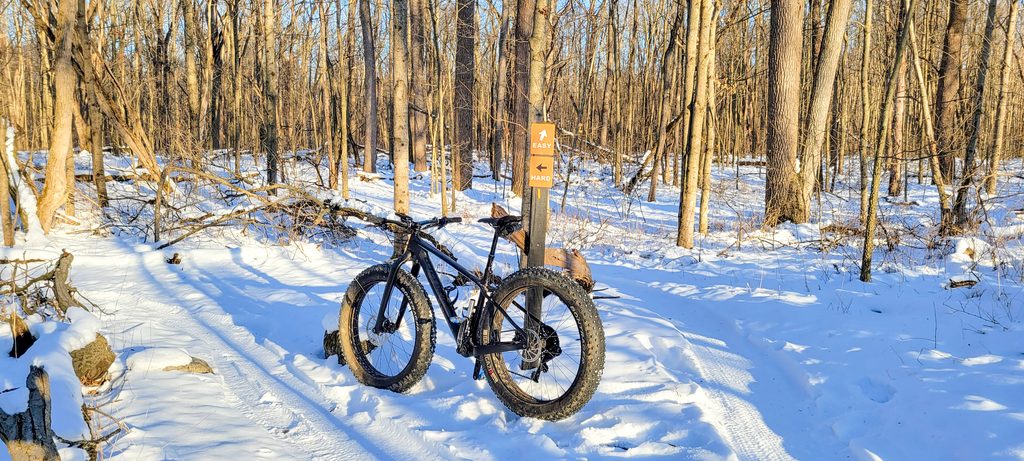
SWMMBA will continue to pause grooming operations, and if winters start trending back in our favor, we’ll reevaluate whether it’s feasible to resume in a future season.
WHAT GROOMING ACTUALLY TAKES
For years, our volunteers groomed a dedicated, stand-alone fat bike loop at Fort Custer. We kept it separate from the main trail because hikers tend to ruin a groomed main trail, and plenty of people ride regular 2.2″ and 2.4″ tires out there most winters.
The work starts long before the first snowfall. Every fall we pull a permit from the DNR, then volunteers spend hours clearing the corridor of brush and deadfall. Once the snow comes, our groomers build a base with custom-fabricated drags and rollers that club members designed and built themselves, pulled behind a snowmobile. A single grooming session can run for many hours, long into the night. And a thaw can turn all of that work to mush in a single day.
WHY WE STEPPED BACK
Fort Custer had some great groomed riding from about 2014 to 2020. Since then, Mother Nature hasn’t cooperated. We pulled permits and cleared the corridor season after season, and in recent years all of that work yielded just a handful of rideable days. Our volunteers got burnt out, and we couldn’t justify the volunteer hours or the money.
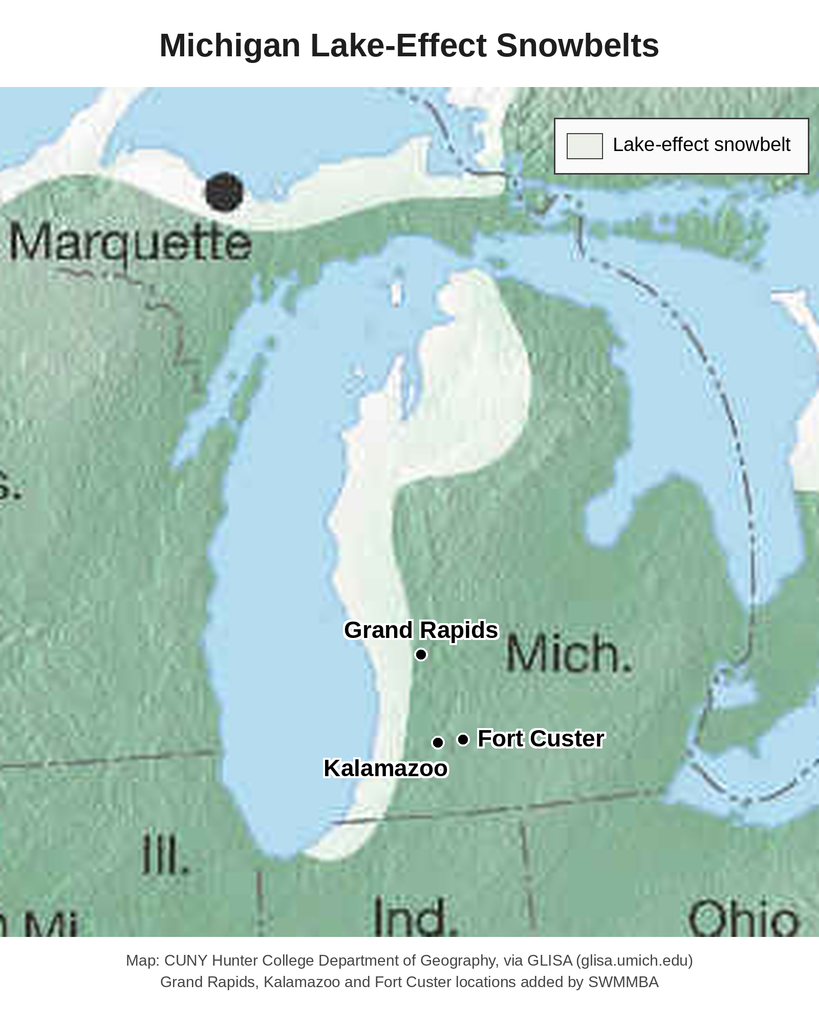
For comparison: Marquette, home to some of the best groomed riding in the world, averages nearly 200 inches of snow a year with few midwinter thaws. They have a dedicated grooming facility and a big volunteer team. Kalamazoo gets roughly a third of that snow on average, plus several complete thaws every winter.
Closer to home, our friends in Grand Rapids, West Michigan Mountain Biking Alliance (WMMBA), have had more luck with their grooming program, and we’re sure they’d love your support in that effort!
AND THIS WINTER?
This year we’re heading into a very strong El Niño, possibly one of the strongest on record. NOAA’s winter outlook favors warmer-than-normal temperatures for Michigan, and past strong El Niño winters like 1982–83, 1997–98 and 2015–16 generally ran mild with below-average snow in the Great Lakes. No two winters are alike, but the odds aren’t in grooming’s favor.
WHAT ABOUT OUR OTHER TRAILS?
• Al Sabo: High volume of mixed traffic makes a groomed trail tough to protect.
• Warnaar: The narrow tread (under 30″) and short, steep grade changes don’t work with our snowmobile setup.
• Maple Hill: The elevation alone rules it out, since those climbs would wreck a groomed surface. Tabletops and berms in the snow sure sound fun, though.
THE GOOD NEWS
Our trails are open to bikes all winter, and plenty of riders have great success on fat bikes (and normal MTBs) on the regular singletrack. Check the Southwest Michigan Trail Conditions page before you head out.
WANT TO HELP?
Grooming takes people as much as it takes snow. If you’re interested in helping lead a grooming team in a future season, we’d love to talk. Send us a message.